
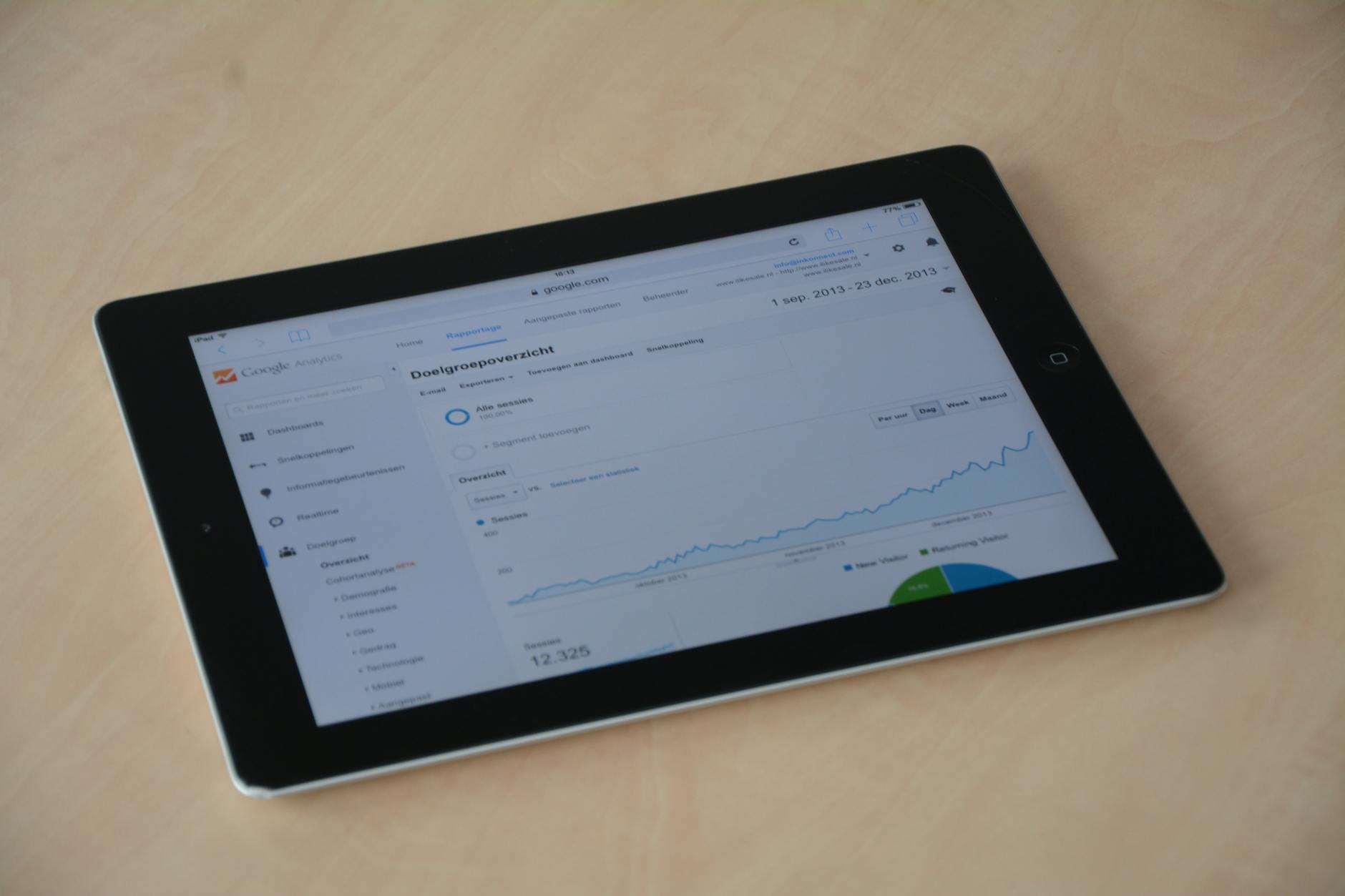

The single most common request from a senior brand leader is "what should I be measuring?" The single most common mistake is to answer with a long list. A useful brand dashboard is short, expensive to compile, and reports on questions the leadership team can actually act on. Most don't.
Why brand metrics tend to drift toward the trivial
The metrics that are easiest to measure are the ones that show up in dashboards. Impressions, reach, follower counts, share-of-voice — all are cheap to instrument and all are weakly correlated with the things a senior leadership team actually cares about: preference, pricing power, talent attraction, and resilience under pressure. The result is dashboards full of motion and short of meaning.
This is not a tooling problem. It is a discipline problem. The discipline is deciding what the brand is for, then asking which numbers would tell you whether it is doing that job. Most brand teams skip the first step and proxy the second with whatever the platforms emit by default.
What a brand should actually be doing for the business
Strip away the language and a brand earns its keep on four jobs.
- It commands a price premium over the closest functional substitute.
- It shortens the sales cycle because prospects arrive pre-disposed.
- It attracts and retains talent the company would otherwise have to overpay for.
- It buys time in a crisis — the brand absorbs incidents that would damage a weaker company.
Anything you measure should map to one of these. If a metric does not connect to one of those four, ask what it's doing in your dashboard.
What to measure (and what each tells you)
Unaided awareness in your defined audience
Ask a representative sample of your target buyer to name the companies they would consider for a problem your product solves. The percentage that name you, unprompted, is the cleanest awareness measure available. Aided awareness ("have you heard of X?") inflates and is mostly useless. Run unaided awareness twice a year. Track the trend, not the absolute number — the absolute number depends heavily on sampling.
Consideration set inclusion
Of buyers who name companies for your category, what proportion include you in their final shortlist? This is the number that most directly converts to pipeline. A brand that grows awareness without growing consideration is a brand spending money to be famous for the wrong things.
Price-premium tolerance
For closed-won deals, what discount did you give versus list, compared to the same number for the closest competitor? If your discounts are deeper, the brand is not commanding the premium it should. If they're shallower, the brand is doing real commercial work — and that's the number to defend in a board meeting.
Time-to-trust
From first conversation to signed contract, how long does the average new customer take? Brand work that is paying off shortens this number. If it isn't moving, your brand is not arriving in the room ahead of you.
Inbound-to-outbound ratio
What percentage of new business arrived inbound (sought you out) versus outbound (you sought them)? Strong brands shift this ratio over time. The shift is slow and noisy quarter-to-quarter; look at year-over-year.
Talent acquisition friction
Time-to-hire for senior roles, and the calibre of candidates who reach final interviews. Brands that talent respects make hiring cheaper and faster. Brands that talent dismisses make every senior hire a project.
What not to measure (or: measure but don't report)
Some metrics belong inside the marketing function as operating signals but should not appear on a brand dashboard read by leadership.
- Follower counts and impressions — useful internally for channel optimisation, irrelevant to the leadership question of whether the brand is working.
- Engagement rates — easy to game, weakly tied to commercial outcomes.
- Vanity awards — useful for hiring sometimes, but reporting them as brand performance suggests there isn't anything else.
- NPS in isolation — meaningful as a customer-experience metric, but not a brand metric. NPS measures how the product performed for existing customers, not how the brand performs in the market.
The cadence question
Brand metrics move slowly. Reporting them weekly creates noise; reporting them quarterly is usually right. The two awareness metrics belong on a six-monthly cadence. The commercial metrics — premium tolerance, time-to-trust, inbound ratio — belong in the standard quarterly business review. Talent friction belongs in the people review.
Trying to report brand monthly is one of the loudest signals that the brand function is being measured by the wrong people on the wrong cadence — usually because someone wants a number to compare against media spend, and the brand has been pressed into the role of a performance channel it isn't.
Where most dashboards stall
Three patterns recur. The first is platform-default metrics — reporting whatever the social or analytics tool emits, which has nothing to do with the four jobs above. The second is vanity selection — choosing the metrics that look best, not the ones that matter most. The third is cadence mismatch — pushing brand metrics to a weekly rhythm where they look like they aren't moving, when in fact they are moving on their natural longer arc.
What This Looks Like in Practice
Our work with mature brands such as BGR shows the long arc clearly: the metrics that matter — preference, repeat custom, talent attraction — compound over years, not quarters. A dashboard that reports them on the right cadence makes the compounding visible. A dashboard that doesn't, hides it.
Closing
A useful brand dashboard is short, expensive to compile, slow to move, and answers the questions a leadership team actually has. Most dashboards are the opposite — long, automated, fast-moving, and answer questions no senior person asked.
If your brand dashboard isn't telling you what you need to know, a conversation costs nothing.